



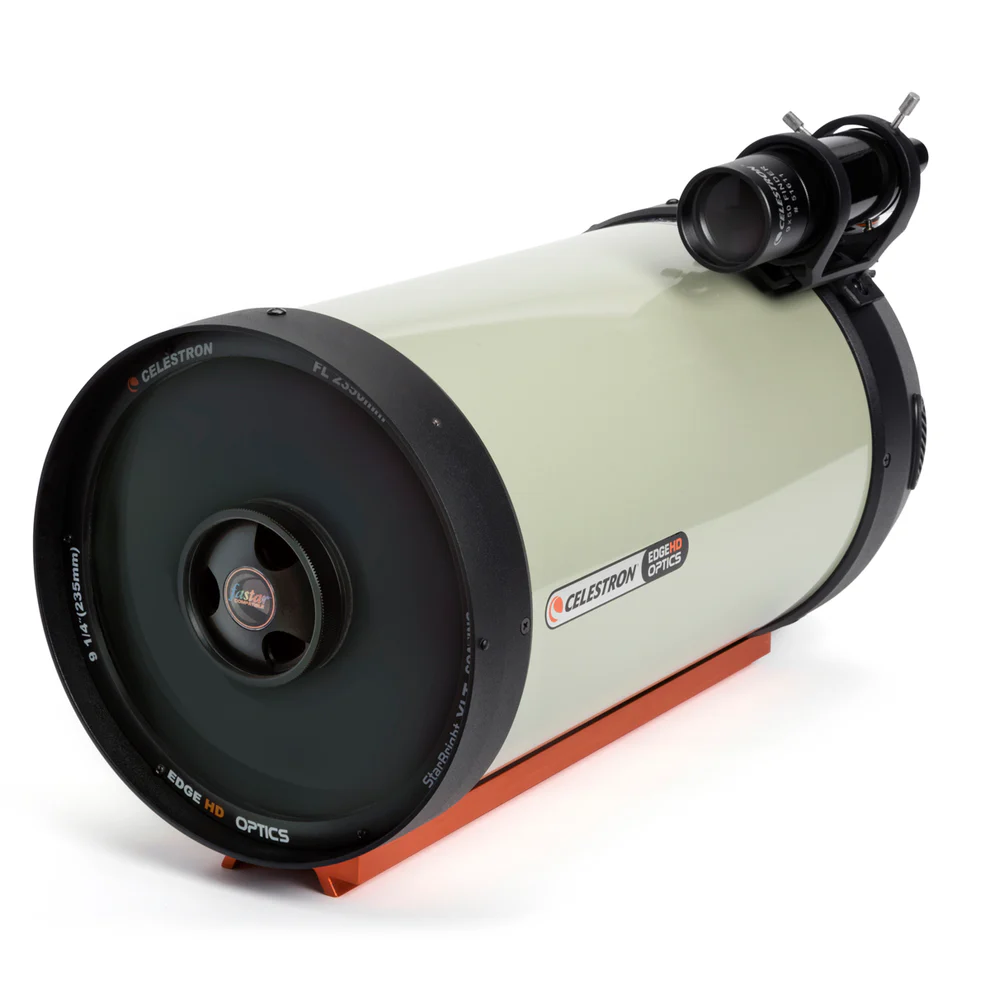
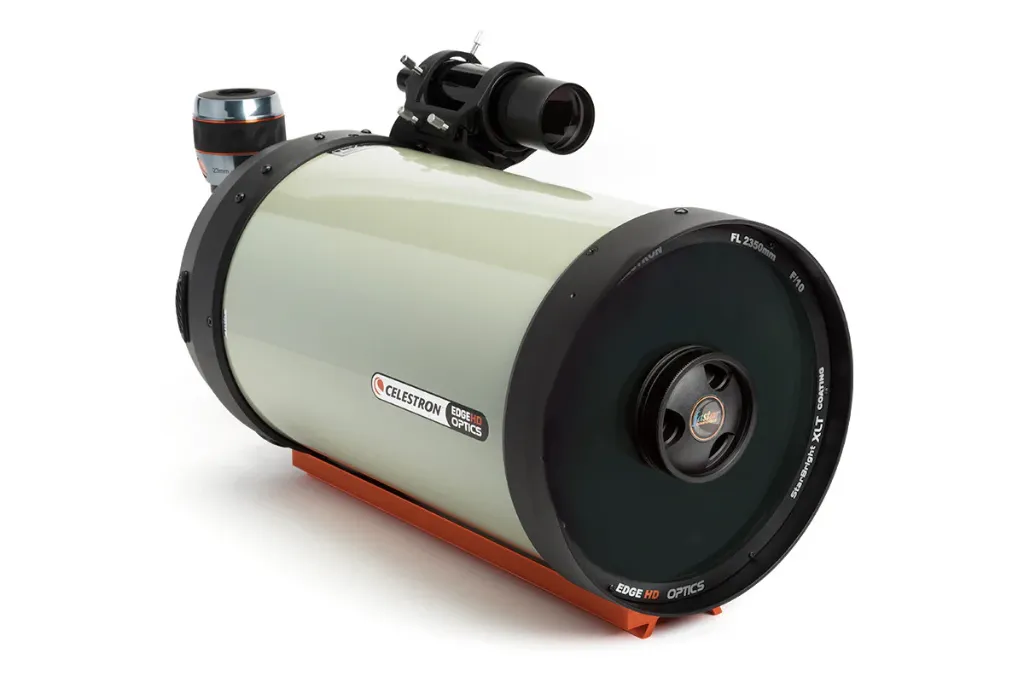
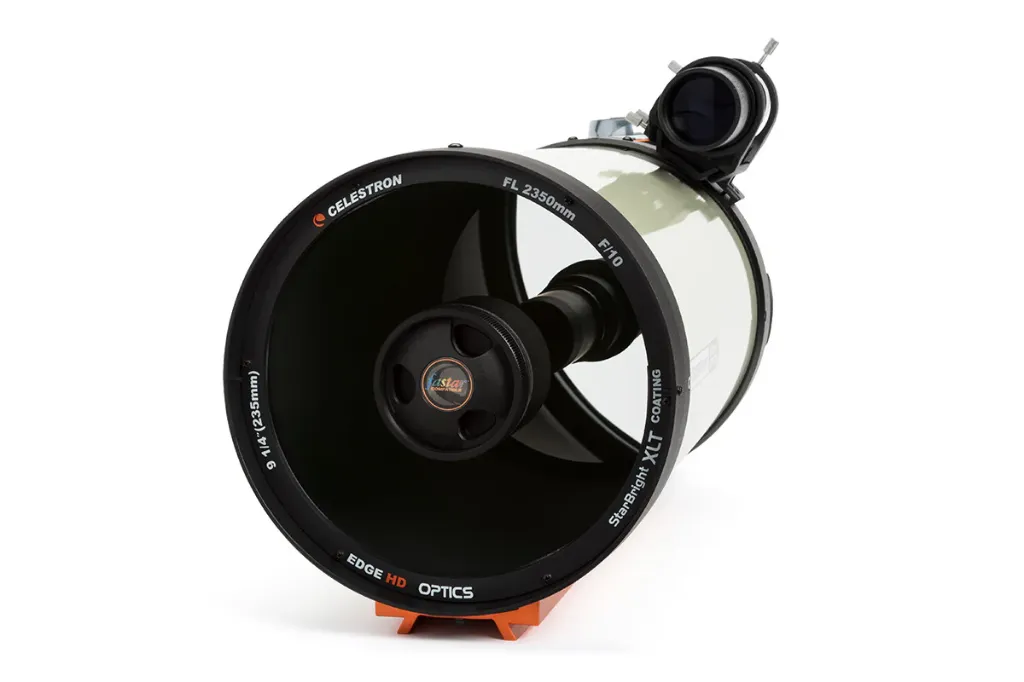
See the Universe in True HD
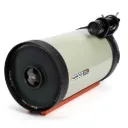
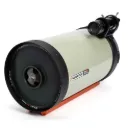
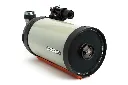
EdgeHD is an aplanatic, flat-field Schmidt-Cassegrain telescope engineered to yield completely aberration-free, razor-sharp images across a remarkably wide visual and photographic field of view.
Unlike standard optical configurations that only focus on reducing off-axis coma, the EdgeHD proprietary system produces an institutional astrograph-quality flat focal plane. This guarantees flawless focus uniformity stretching all the way to the absolute margins of the field of view.
True Astrograph Quality Instruments
Many traditional telescope designs marketed as "astrographs" only maintain pinpoint star fields across a curved focal plane. While satisfactory for basic visual tracking, stars will noticeably defocus or bloat at the outer edges when captured via the flat chip sensors of modern digital cameras.
EdgeHD optics yield a focal plane that is more than three times flatter than a standard Schmidt-Cassegrain system and vastly superior to competing coma-free builds. You are guaranteed pinpoint, perfectly round stars even on the largest commercial CCD and CMOS sensors available today.
Advanced Mechanical & Structural Features
Mirror Clutches
Flexible tension clutches keep the primary mirror safe and locked in position, entirely mitigating unwanted image shift during long-exposure deep-sky astrophotography once focus is dialed in.
Rear Tube Vents
Integrated rear cooling vents accelerate thermal equilibrium by releasing hot air from behind the primary mirror. Outfitted with a specialized 50-mesh micromesh filter to keep dust out.
Fastar Versatility
Removable secondary mirror lets you transform the native f/10 long-reach configuration into a blazing-fast f/2 wide-field setup via third-party lens assemblies (HyperStar).
🔬 Individually Laboratory Tested
Every single EdgeHD optical tube undergoes meticulous individual evaluation. We do not just certify optical surface profiles; each unit is field-tested utilizing an artificial star matrix and high-resolution camera tracking to verify strict diffraction-limited metrics before packaging.
| Optical Tube Specifications | |
|---|---|
| Optical Design | Aplanatic Schmidt-Cassegrain (EdgeHD) |
| Aperture | 234.95mm (9.25 inches) |
| Focal Length | 2350mm (93 inches) |
| Focal Ratio | f/10 |
| Eyepiece Included | 23mm Luminos (2-inch wide-angle) |
| Magnification (with Eyepiece 1) | 102x |
| Finderscope Assembly | 9x50 Premium Finderscope |
| Star Diagonal | 2" High-Reflectivity Mirror Diagonal with 1.25" Adapter |
| Optical Tube Material | Premium Aluminum |
| Highest Useful Magnification | 555x |
| Lowest Useful Magnification | 34x |
| Limiting Stellar Magnitude | 14.4 |
| Resolution (Rayleigh / Dawes) | 0.59 arc seconds / 0.49 arc seconds |
| Light Gathering Power | 1127x (Compared to the human eye) |
| Secondary Mirror Obstruction | 85mm (3.35" by linear diameter / 13% by area) |
| Optical Coatings | StarBright XLT® Premium Multi-Coatings |
| Optical Tube Dimensions | 559mm Length x 271.78mm Diameter (22" x 10.7") |
| Optical Tube Weight | 21 lbs (9.53 kg) |
| Dovetail Compatibility | CGE Wide Dovetail Bar |
| Available Resource Files | Action |
|---|---|
| EdgeHD Optics Series Instruction Manual | Download |
| Advanced Optical Technology Whitepaper (EdgeHD Systems) | Download |
| Periodic Error Correction Deployment Utility (PECTool Software) | Download |
| 9.25" EdgeHD Optical Tube Mechanical Dimensional Blueprints | Download |
| Celestron SCT & EdgeHD Optical Collimation Adjustment Protocol | Download |
| Video Tutorial: Aligning a Red Dot Finder to Your Telescope | Watch |
| Official Celestron Optical Systems Solar Safety Guidelines | View |
| Technical Data Sheet: Factory Collimation Screw Dimensions Matrix | View |
CRITICAL SOLAR WARNING!
- Never look directly at the Sun with the naked eye or with an optical device unless you have installed a certified, dedicated solar filter. Permanent, irreversible retinal damage will occur.
- Never project the solar image onto any surface through this optical system. Extreme internal heat buildup can permanently destroy internal optics and structural components.
- Never leave the instrument unsupervised. Ensure an adult familiar with operational protocols handles the setup, especially around children.
Frequently Asked Questions (FAQ)
Q: What is the maximum recommended instrument payload when configuring a camera setup in Fastar / HyperStar mode?
A: We highly recommend maintaining a strict payload threshold of no more than 25 lbs (11.3 kg) balanced at a reference distance of 4.2 inches away from the 9.25" Schmidt corrector cell plate.